 Benefits for Liberia
LGE's projects deliver benefits at three levels: for the nation, for Nimba County and its communities, and for the West African region.
The solar project alone adds about 110 MW AC of capacity and about 201 GWh of clean electricity in its first year. That is a large addition to a national system with about 126 MW installed today. The biomass programme adds firm capacity on top.
Solar output is highest in the dry season, when hydro output falls by up to two thirds. The projects fill the seasonal gap that drives load-shedding today.
The solar project's levelised cost of energy is well below Liberia's prevailing USD 0.24/kWh retail tariff and below the cost of heavy fuel oil generation and spot imports. This lowers the average cost of supply for LEC and, over time, for consumers.
Domestic solar and biomass replace imported fuel and imported electricity. This keeps money in the Liberian economy and protects the country from global fuel price shocks.
The solar project brings approximately USD 128 million of long-term international and development finance capital into Liberia, and the biomass programme brings substantially more.
An internationally financed renewable project shows that large, bankable power projects can be financed and delivered in Liberia. That opens the door to further private investment in the sector.
The projects pay corporate tax after the initial tax holiday and generate customs and indirect tax revenue throughout their operating lives.
The battery, plant controller and inverters provide voltage and frequency support, improving the stability and quality of supply on the national network.
The projects advance Liberia's Mission 300 targets of 75% electricity access and 75% renewable energy by 2030, and support its Nationally Determined Contribution under the Paris Agreement.
Reliable, lower-cost electricity supports hospitals and clinics, schools, water supply, telecommunications, public services and enterprise.
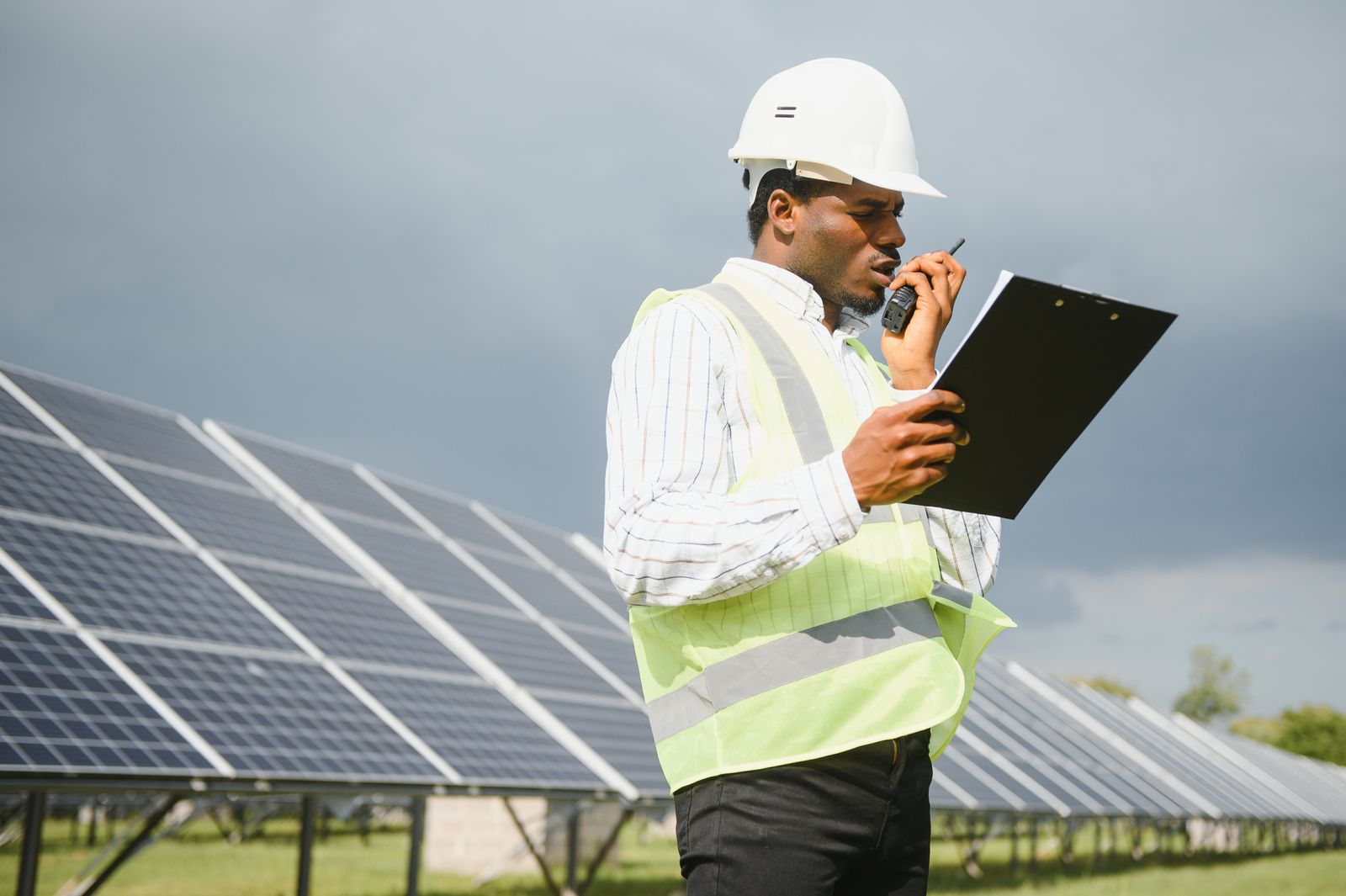
Peak construction workers on the solar project
Connection through the Yekepa CLSG substation strengthens Liberia's role in the West African Power Pool and supports cross-border electricity trade.
The projects add clean, domestically generated energy to the interconnected system shared by Côte d'Ivoire, Liberia, Sierra Leone and Guinea.
Battery-backed voltage, frequency and ramp-rate support benefits the wider interconnected network.
A utility-scale solar and storage plant connected to the regional grid is a model that similar projects across West Africa can follow.
Environment
CO2 avoided over the solar project's life
Our Standards
Every LGE project is developed to the IFC Performance Standards and the Equator Principles. Each project includes:
A full Environmental and Social Impact Assessment and an Environmental Permit from EPA Liberia.
Land agreements under the Land Rights Act 2018, registered with the Liberia Land Authority, with a free, prior and informed consent process.
Compensation at full replacement cost and a livelihood restoration plan wherever land use is affected, completed before any land is taken.
Biodiversity surveys and layout avoidance, reflecting the project's proximity to the Mount Nimba Strict Nature Reserve.
Fair labour standards, worker accommodation to international standards, and a code of conduct.
Three grievance mechanisms: one for communities, one for workers, and a confidential channel.
Affordable and Clean Energy
Decent Work and Economic Growth
Industry, Innovation and Infrastructure
Climate Action
Life on Land
